
Here are some creative ideas and resources for all-ages learning about social change and civic engagement.
We patterned the Fellowship Friday event on Solidarity Sundays, a nationwide network of feminist activist groups coordinating practical, focused, collective action to resist the Trump/Pence agenda. You can sign up to get information regularly, and then gather up a group of friends and make community and a difference.
You may also like to check out Indivisible: A Practical Guide for Resisting the Trump Agenda, the short, extremely well-informed guide to civic action gathered together by congressional aides who watched the ascent of the Tea Party and their (admittedly super well-funded) local activism.
Sprung-up locally is the Bay Area Queer Anti-Fascist Network, an ad-hoc collective of groups and individuals building community and engaging in varied and direct action in the Bay Area.
Those of us with younger kids might enjoy checking out picture and chapter books about about electoral politics, social change heroes, and grassroots advocacy. We can read them to or talk with our children about them:
- Solidarity Sundays kids booklist
- Read Brightly list of picture books about elections & voting
- Parentmap list of kid books about election & civics
For older kids, consider reading chapter books together, and talking about them: Solidarity Sunday list section for Older Readers.
For kids of all ages, interesting dinner table conversations could revolve around what we each would do if we were President of the United States, or even a leader in our own immediate community, on the immediate scale of a kid’s preschool or K-6 classroom, or middle or high school.
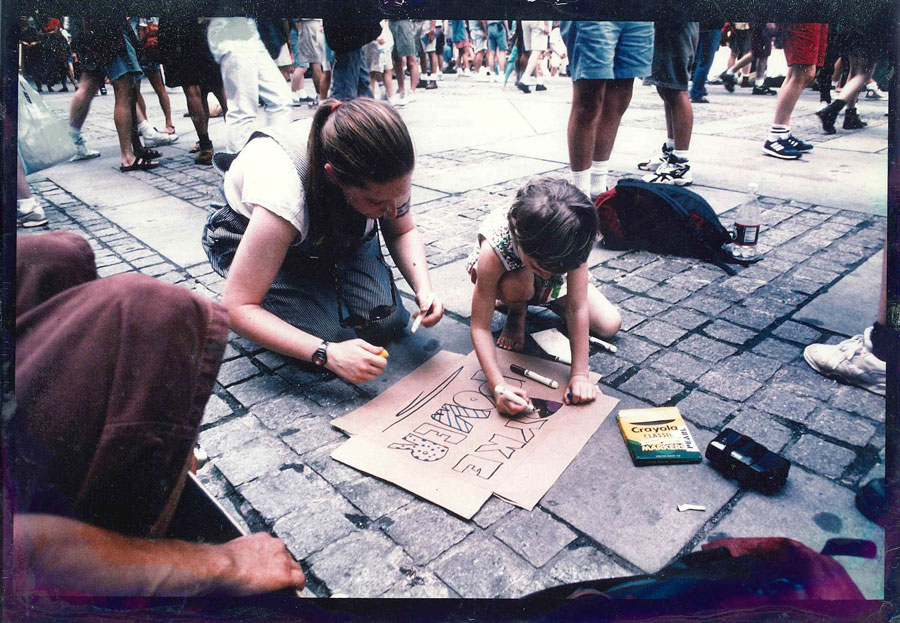
Crafty folks can gather together sign-making materials and create signs you could put in the window of your apartment or house, or in a car, or to take to any of the ongoing opportunities to march with other citizens on behalf of community, diversity, and – among others – LGBTQ families.
Adults and older kids can make a difference on a regular basis contacting your elected officials and urging them to have the courage of their convictions (if your representative is clearly on record to take a stand on behalf of LGBTQ people). Officials on committees considering appointments represent the interests of the entire nation, so you have every right, even a responsibility to committee members with your concerns about a proposed cabinet member – for instance, Betsy DeVos for Education Secretary, who has no experience with public schools and long experience disparaging LGBTQ people and funding organizations which regard trans people as “broken” and unfit to teach.
Kids tween/ pre-tween-aged on up can be hugely invigorated making calls on a Sunday with other kids reading scripts alongside adults to phone message machines of national political figures.
You can learn about about how to locate and contact your elected officials here: help finding contact info for elected officials.
You can get ideas about daily actions you can take, simply via contacting your elected officials, here (their motto: “Resisting extremism in America, one phone call at a time.”: Daily Action
And if you would like to know why it’s more helpful to call than to email, check out this concise run-down in the New York Times last November: “Here’s Why You Should Call, Not Email, Your Legislators”.
Whatever you do, do it often, and do it together! One of the best things that can come of this challenging climate is a renewed passion for democracy.
