
The Entrustment Ceremony – Creating meaningful ritual in open adoption

By Leah Sheldon
Originally Published by Adoption Connection
Entrustmentceremony
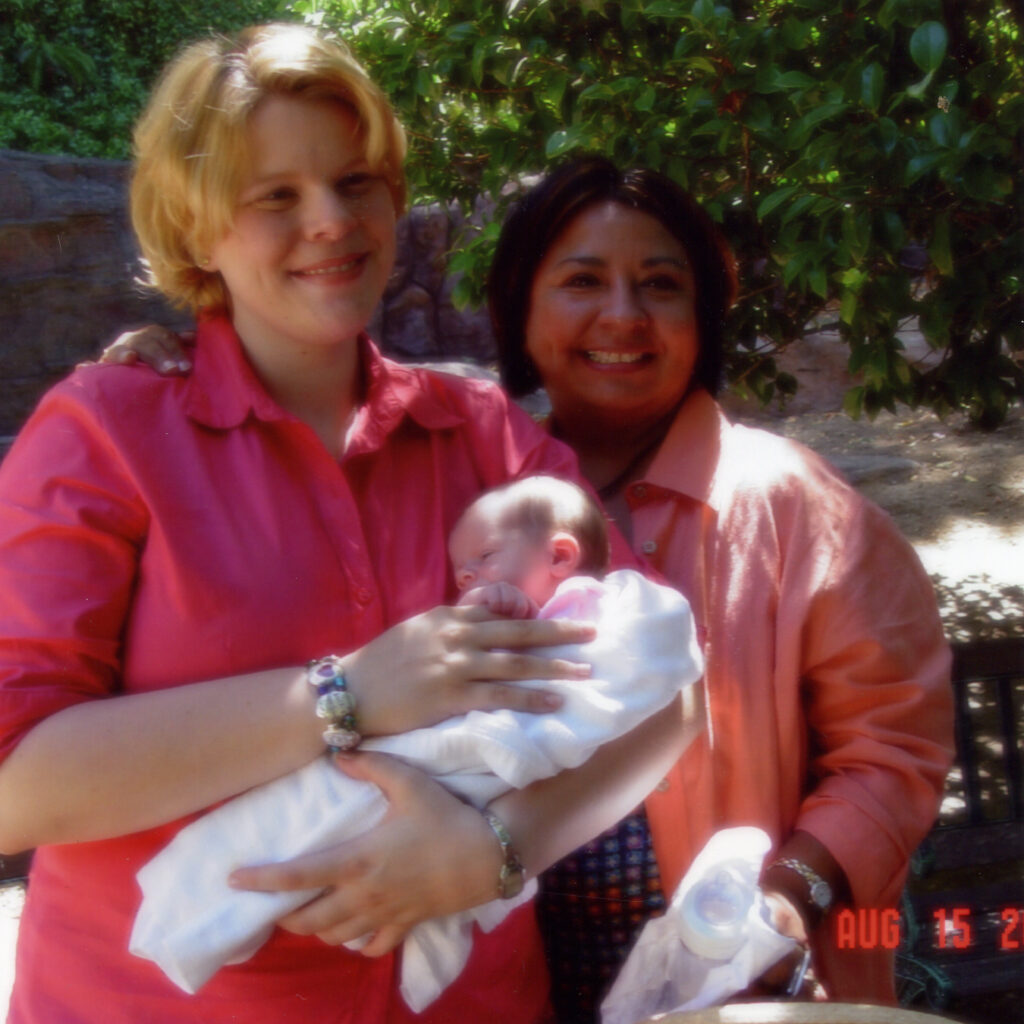
Ashlee (left) and adoptive mom Bobbie exchange vows and bracelets at the entrustment ceremony of daughter Fait

Rituals have always been used to signify a change or rite of passage, or to mark a transition in the life of a person or community. Although they are often interwoven with religious traditions, rituals can be anything that symbolizes and celebrates a life change.  We mark birthdays, baptisms, bar/bat mitzvahs, and weddings with a special ceremony, so why not open adoptions?

The transfer of parental rights from one family to another in an open adoption is bittersweet. The birthmother is giving up her role as caregiver while the adoptive parents are gaining a new family member to love and nurture. The role of a ritual–or entrustment ceremony– to honor this event is becoming very common as adoptive and birth families feel empowered to create open and trusting relationships.

Just as each open adoption unfolds differently, each entrustment ceremony is unique and can be tailored to fit the needs of the birth and adoptive family. Ideally, the ceremony should emphasize that the two families are now creating a new, extended family connection that will forever honor and respect the birthmother’s biological bond to the child.

Tips To Planning an Entrustment Ceremony:

  • Make sure that the ceremony is directed as much as possible by the birthmother and her family. (It is okay if it is planned by the adoptive family, adoption agency, or clergy member if it suits the situation.)
  • Invite key contributors: the birthmother and selected family members of her choosing, along with the adoptive parents and the baby.
  • Make sure everyone has a role in the celebration, however small. Poems or religious passages may be read, or perhaps both the birth and adoptive parents can speak about their hopes and love for the baby.
  • As with all festive rituals, flowers, food, candles, and meaningful music can all be a part of the ceremony.
  • There is no right or wrong way to plan an entrustment ceremony. Do what feels right and what will contribute to connection and meaningful memories.

The Ritual Unfolds

Adoptive parents Karen and Chris suggested the idea of creating an entrustment ceremony with Denise, their son Jonah’s birthmother. Before the ceremony took place, the couple videotaped Denise holding Jonah and saying her goodbye on camera. (She had said a private goodbye the day before.) The family brought in a local pastor to lead them in a few readings, and the adoptive family shared an oath and a commitment to raise their son in a strong and loving home. Flowers were exchanged, and birth and adoptive grandparents and friends were present to witness the special ceremony.

entrustmentceremonyquote1

Eric and Robin originally planned on a ceremony at the hospital as well, but plans changed when Shelly, their daughter’s birthmother, had an unexpected Caesarean section. Much of her family wouldn’t be able to make it. They decided to meet at the birth family’s home the day after Shelly was released from the hospital, when her extended family could participate. Shelly and her mother were able to print and frame pictures of the baby taken at the hospital, as well as images of family and friends to display around the house. The birth grandmother ordered a sheet cake with four candles for the four days of life their daughter had had. Eric says, “We called it a ‘Celebration of Life’ so it wouldn’t take on a religious tone, and it really was a celebration. The family had put together family heirlooms for us to take home for Madison, including Shelly’s silver baby rattle.”

Eric and Robin knew that Shelly and her family were private people, so instead of speaking publicly at the party, they gave her a letter that they had written the night before.  “We wanted to let her and her family knows how thankful we were for them and how much we love our daughter,” says Eric.

Bobbie and Eli and their birthmother, Ashlee, waited until two weeks after their daughter’s birth to host a ceremony. It coincided with the signing of Ashlee’s relinquishment papers, making the adoption legally binding. Bobbie says, “Waiting those two weeks felt like a good decision for everyone because leaving the hospital was such an emotional experience for all of us.” During their ceremony, Bobbie and Eli presented their birthmother with a special bracelet that was inscribed with the words “Faith, Hope and Courage,” which matches one Bobbie wears as well.

Birth grandfather and poet, Paul, incorporating a special adoption poem during the legal relinquishment process of his daughter creating important memories and a keepsake in their open adoption process.

Take the Long View

An entrustment ceremony isn’t going to be possible for every adoption, but Lynne Fingerman, Director of Adoption Connection, believes adoptive parents can do little things in the hospital that can ease the transition and celebrate the birthmother’s love and care. “Whether you send flowers to your birthmother or have her family participate at the hospital in feeding the baby, there are things you can do to create trust and ongoing tradition… things that you can tell your child about later on.”

When Bill and Danielle adopted their daughter, Cassandra, their daughter’s birthgrandmother wanted to be the first to hold her. The adoptive family made it as easy as possible for her by finding a room next to the nursery where a rocking chair would fit so that she could have some quiet moments with Cassandra and be the first to hold her.

entrustmentceremonyquote2An Event to Remember

When Bridget chose to place her son with Erik and Christina, she was hesitant to go forward with an entrustment ceremony at the hospital. “I was initially scared and only agreed because Erik and Christina wanted to do one,” she says. “But it turned out to be very powerful for me.” Since both families were Catholic, the couple brought in a member of the clergy to say a few words during the ceremony.

Bridget would definitely recommend a ceremony to other birthparents. Her advice? “Be open-minded to the adoptive parents’ ideas and just let them plan it if you feel overwhelmed.”

Taking pictures and videotaping the event are also good ideas. When adoptees start to ask questions about where they come from, they want to taste, touch, and feel as much of the early stuff as they can. Having a video or pictures of the entrustment creates a legacy of caring and love for the child. Just as importantly, it can show the growing child that his or her adoption was a deeply loving choice based on a conscious decision.

Leave a Comment

read more

recent posts

UPDATED: The Skrmetti Decision is a Setback, Not the End

June 23, 2025

Your Rights in California in Response to Recent Executive Orders

March 20, 2025

SB 951: PAID LEAVE JUST GOT A RAISE

December 18, 2024

Thank you for joining us in celebrating and supporting LGBTQ families.

Every contribution, whether one-time or monthly, helps us honor the extraordinary LGBTQ families in our community. Our Family Coalition is the only organization in California dedicated to advancing equity and advocating on behalf of our families, and one of the few nationwide. By giving, you stand with us in pride and solidarity, ensuring that every family feels seen, valued, and celebrated. Your support has been crucial and with your help we can continue this legacy for generations.

Ask About Alternatives

You’re entitled to know if there are other options that might work for you. If a provider presents a single course of action, ask, “Are there other ways to approach this?” or “What other treatments might be possible?” or “Why are you recommending this treatment plan compared to alternative options?”

Pause and Reflect

If you’re unsure about a treatment recommendation, it’s okay to take a pause. Say something like, “I’d like to take some time to consider this before making a decision.” This gives you the space to process without feeling pressured. You can discuss a timeline with your provider that works for you. It is okay to want more time.

Right to Informed Consent

You have the right to understand all aspects of your care, including the risks, benefits, and alternatives. Never feel pressured into any procedure without clear information.

Confidentiality Protections

HIPAA laws safeguard your privacy and health information. Healthcare providers must keep all your personal health information confidential.

Anti-Discrimination Protections

Federal laws like Section 1557 of the Affordable Care Act prohibit discrimination in healthcare on the basis of race, color, national origin, sex (including gender identity and sexual orientation), age, or disability.

Advocate for Comprehensive Explanations

You have the right to fully understand any diagnosis, treatment, or procedure. Don’t hesitate to ask for explanations that make sense to you. For instance, say, “Can you walk me through how this treatment will work?” or “What are some possible side effects?” “What should I look out for?” 

Trust Your Own Knowledge


While healthcare providers bring expertise in medicine, you are the expert on your own body, experiences, and needs. If something doesn’t feel right, trust yourself and communicate your concerns. Phrases to lean on: “This is not normal for my body” “I have never experienced these symptoms before now” … 

Add Your Heading Text Here

Lorem ipsum dolor sit amet, consectetur adipiscing elit, sed do eiusmod tempor incididunt ut labore et dolore magna aliqua. Ut enim ad minim veniam, quis nostrud exercitation ullamco laboris nisi ut aliquip ex ea commodo consequat. Duis aute irure dolor in reprehenderit in voluptate velit esse cillum dolore eu fugiat nulla pariatur. Excepteur sint occaecat cupidatat non proident, sunt in culpa qui officia deserunt mollit anim id est laborum.

User Registration

In order to ask or answer questions, you must be logged in. Please create an account.

registration form

Subsribe to our newsletter

Sign in

In order to ask or answer questions, you must be logged in. 

User Registration

In order to ask or answer questions, you must be logged in. Please create an account.

registration form

Teacher Trainings and Professional Development

Each of OFC’s outstanding and practical workshops include:

  • Content learning, lesson plans and book lists​ that support teachers to have effective
    and developmentally supportive dialogue when teaching LGBTQ History
  • Reflective activities​ that allow participants to connect with their intersectional identities,
    gender stories and explore the dynamics of implicit bias to better challenge gender stereotypes
  • Current language and techniques​ to support families and teachers to talk more fluently
    and comfortably about all types of difference
  • Frameworks and models for effectively organizing coalitions​ interested in accountability
    and policy change in schools and organizations

Workshop topics:

  • LGBTQ History​: Teaching the New California History and Social Science Framework
  • LGBTQ-Focused Education Law and Policy​:​ Understanding Obligations and Protections
  • Implementing LGBTQ History:​ From Policy to Practice in your Region
  • Family Diversity:​ ​ The Early Childhood Classroom and Making All Families Visible
  • Gender Inclusion:​ ​ What is a Gender Spectrum and How Do I Reduce Gender Bias?
  • Transgender and Non-Binary Students​:​ How to Create Inclusive Spaces for All Genders
  • Anti-Bullying & Social Emotional Learning​:​ A Welcoming Schools Approach
  • Family and School Advocacy:​ Building Coalitions for Sustainable Change

For more information or to schedule a workshop, please contact the OFC Education Team: ​education@ourfamily.org

Sponsoship Benefits

Apply for a job

Job application
Enter email
Confirm email
Can be one or two files

Community Annoucements

Share your event or opportunity

Announcements will appear:

  • in a blog post on our blog (published and archived on our website, which is viewed by over 2,500 unique visitors each month)
  • highlighted in our monthly e-newsletter (distributed to over 7,500 email addresses)

Listings must be:

  • Designed for or of particular value to LGBTQ families and children and/or prospective LGBTQ parents
  • Located in the San Francisco Bay Area, if in person, or available online/ virtually, if outside Northern California

Deadline:

  • Content submitted by the third Tuesday of the month will appear in in the following month’s newsletter.

We love lifting up the good work that members of our community and other social change organizations are doing in the Bay Area and beyond! Let us know if you wish to share a community event or opportunity with our families.

Community Announcements
Title of event or opportunity, including host organization if applicable. For example: "LGBTQ Parents & Parents-to-Be Support Circle" or "Seeking Gay Dads for Study"
Location and address in one line, if applicable. For example: "Natural Resources, 1367 Valencia St., San Francisco"; "Link to the Study or Info Page”
Up to 300 characters (with spaces; about 50 words), describing the event or listing. For example: "This group is offered for LGBTQ-parents and parents-to-be who are awaiting adoption, the birth of their child(ren) through surrogacy, or who are pregnant. Share newborn care tips and learn simple mindfulness practices to increase ease during this time of so many unknowns and exciting transitions.”
Upload a logo or an image you'd like to accompany your listing. (optional)
Accepted file types: jpg, png, gif. Maximum file size: 256 Mb.

For further information

Enter email
Confirm email
Enter Email
Events can be distributed up to 3 times. For events far in advance, please specify which months you would like the event to run in our e-newsletter.

Share your story

We’re looking for stories by or about LGBTQ+ parents/caregivers or prospective parents, as well as the grandparents or adult children of LGBTQ+ headed families.

Generally, we hope your story will not only inform other families on LGBTQ+ family topics, but also let others know that they are not alone in the journey of advocating for our families.

Whether you feel like you’ve arrived, or your story is not yet complete, know that we can keep one another company all along the way. And it always helps to feel a little less alone.

  • How is your family structured?
  • What is your family formation story?
  • Have you faced challenges in forming your family or parenting because of your identity?
  • How were you able to navigate these challenges?
  • What has been the impact on you/your spouse/children?
  • What systems/people helped guide you?
  • What advice would you have for other LGBTQ-headed families – or perhaps just your younger self?
  • How have you or your family dealt with challenges at schools, medical providers, or elsewhere?
  • Were there times when you expected resistance and instead were welcomed?
  • Do you have opinions you’d like to share about current events, or perhaps movies, TV shows, music, or more?
  • Do you have a story about how Our Family Coalition has had an impact on your or your family that you’d like to share?
Share your story

Upload your story content here - up to 1,000 characters

By checking this box, I consent to the content I've uploaded here, both written and photographic, to be published on Our Family Coalition's blog.

I understand that the content will be freely available on the internet and may be seen by the general public. I further understand that Our Family Coalition cannot be held liable for the theft and re-publication of this content.

I further understand that I will be given an opportunity to review (or revoke) the piece before it is published.

This consent will be treated confidentially.

Scroll to Top